United Kingdom · notice triage · literacy
How to read a tender notice in ten minutes (Contracts Finder / Find a Tender triage literacy)
You have a URL — from a portal alert, a colleague’s forward, or a Monday digest match. Before you download the ITT pack or call a bid writer, spend ten minutes on the published notice. This guide teaches notice-reading literacy for facilities, cleaning and trades SMEs on roughly £10k–£250k lots. It is decision-support reading only — not bid writing, not legal advice.
Free weekly · £19/mo daily · £9.99 memo · £29.99 pack
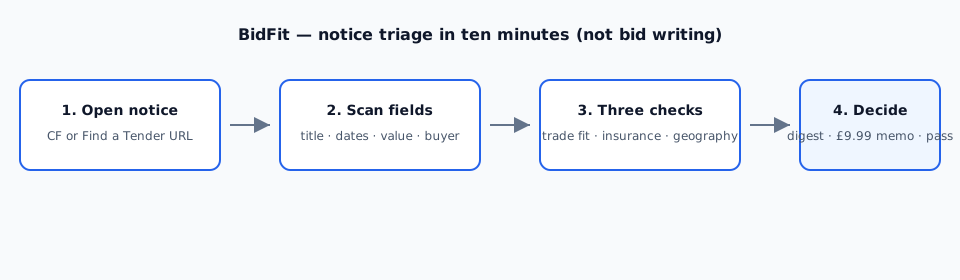
What to scan first on a UK public notice
Contracts Finder and Find a Tender both publish a notice page before you reach the buyer portal or ITT pack. On that page, read in this order — you are building a picture, not writing a response.
-
Title and buyer. Does the title match what you actually deliver? Note the buyer type — council, college, NHS trust, housing association. A “cleaning” title on a wider facilities lot is a common trap. See bid/no-bid decision for UK SMEs for trade-fit gates.
-
Dates and clock. Deadline date and time in BST. Enquiry deadline if shown. Count working days, not calendar optimism. If the window is too short to register on the buyer portal and stand up a credible response, that is a triage stop — not a reason to open the pack yet.
-
Value cues. Estimated contract value, lot value band, or “£X–£Y” range on the notice. Does it sit in your normal band? A £2m headline on a specialist lot may still be irrelevant if you only chase £40k school work — but value cues tell you whether the notice is worth the next five minutes.
-
Procedure and documents. Open procedure, framework call-off, DPS mini-competition? Are any documents attached on the notice page itself — scope summary, insurance minimums, SME suitability flag? Note what is on the notice versus what says “see ITT pack”.
-
Geography and sites. Region, site list, “must attend” locations. If travel-to-work does not work, stop — even when the value looks fine.
If you do not yet have a named URL — only a vague “we should bid more public work” — start with portal alerts and the digest. See Contracts Finder + Find a Tender alerts without six tabs.
Three things to check in about thirty seconds
Before you decide whether a £9.99 memo is worth it, run these three checks on the published notice. Each takes roughly ten seconds.
-
Clock still open? Enough working days left to register, visit site if required, and draft — in your firm’s realistic capacity, not ideal-world capacity.
-
Trade and region plausible? Title, CPV codes, description and geography all point at work you do and can cover. If any one of these is clearly wrong, discard without a memo.
-
Any stated gate you already fail? Framework-only wording, SME flag off, accreditation named that you do not hold, insurance minimum above your cover — anything clearly stated on the notice that you cannot meet in the time left. Mark it and move on.
If all three pass the thirty-second test and you still cannot decide from gut feel alone, that is when a memo conversation starts. If any one fails clearly, the notice alone was enough — no memo required.
Notice triage vs reading the full ITT pack
Notice triage uses only what Contracts Finder or Find a Tender publishes on the notice page: title, description, dates, procedure type, stated requirements, SME flag, framework references, attached summaries. You are answering: is this pack worth downloading?
ITT pack reading is the next stage — for firms that survived triage. The pack holds scoring weights, turnover multiples, detailed insurance schedules, TUPE headcount, method-statement asks, portal registration steps and submission format. That is bid-preparation work, not notice literacy.
BidFit memos sit between the two:
- £9.99 public-notice memo — sourced pass/fail from the published notice only. Pack-only gates stay Unknown. See the Bedford sample.
- £29.99 pack memo — same structure, but you forward the ITT/SQ and we fill gates that live inside it. Still not a written bid.
Full gate checklist: bid/no-bid decision for UK SMEs. Memo vs digest line: when a notice match needs a memo.
When a memo helps vs when the notice alone is enough
The notice alone is enough when:
- Title, buyer, geography or clock already tell you it is not your trade or not your travel-to-work.
- A stated gate on the notice clearly fails — framework panel you are not on, SME flag off, deadline inside three working days.
- You only needed confirmation the notice exists — the free weekly digest or £19/month daily upgrade did that job.
A £9.99 memo helps when:
- The notice survived your ten-minute triage and the cost of a wrong bid is real — a £699–£5,000 writer invoice or a week of director time.
- You want a sourced fit score and pass/fail table before bid-writing spend.
- Someone else will ask “why are we bidding this?” and you want a PDF with sources.
£29.99 pack memo only when you have the ITT/SQ and gates that were Unknown on the notice must be filled. Product detail: how it works and prices.
What BidFit will not do
- Not bid writing. No draft responses, no SQ completion, no method statements, no pricing schedules.
- Not legal, TUPE or insurance advice. We flag what the notice says; you talk to your advisers.
- Not a replacement for gov.uk. Keep official saved searches as source of truth.
Questions
What should I scan first on a UK public tender notice?
Start with the title, buyer name and type, deadline date and time (BST), value band or estimated contract value, procedure type, and whether documents are attached on the notice page. You are deciding whether the ITT pack is worth downloading — not reading the pack yet.
How is notice triage different from reading the full ITT pack?
Notice triage uses only what is published on Contracts Finder or Find a Tender — title, description, dates, stated requirements, SME flag, framework wording. The ITT pack holds scoring weights, turnover multiples, insurance detail, TUPE headcount and method-statement asks. Triage kills obvious mismatches in ten minutes; the pack is for firms that survived triage.
When is a BidFit memo worth it versus reading the notice myself?
Stay on the free weekly or £19 daily digest when the notice is an obvious fit or obvious discard. Buy the £9.99 public-notice memo when the notice survived your ten-minute triage and you want a sourced Go / No-go before bid-writing spend. Buy £29.99 only when pack-only gates must be filled from the ITT/SQ you forward. None of these products write the bid.
Does BidFit write bids?
No. This guide is notice-reading literacy and decision-support only. BidFit emails profile-matched notices and, when you ask, writes a sourced Go / No-go memo. We do not draft responses, complete SQs, or register you on buyer portals.
More guides
All BidFit guides: /guides/. Notice-visible vs pack-only: notice-visible gates vs pack-only gates. Bid/no-bid checklist: bid/no-bid decision for UK SMEs. Memo vs digest: when a match needs a memo. Portal setup: Contracts Finder + Find a Tender alerts. TUPE wording on notices: TUPE wording cues on Contracts Finder.
Start with discovery, decide on one notice
Take the free weekly list. When a named notice survives ten-minute triage, order a £9.99 memo — or run the checks yourself and move on.