United Kingdom · Soft FM · Insurance gates
Public liability, insurance limits, and bid/no-bid on soft FM notices
How public liability and professional indemnity requirements appear on Contracts Finder and Find a Tender notices for UK facilities, cleaning and grounds work — and why a £5m or £10m ask can be the fastest no-bid signal before you spend a week on the response.
Free weekly · £19/mo daily · £9.99 memo · £29.99 pack
The £5m knockout
A small window-cleaning or grounds firm in the £10k–£100k contract band typically carries £1m, £2m, or £5m public liability as standard. Open a Contracts Finder notice for a £40k school window-cleaning lot, download the pack, and discover the buyer wants £10m PL — and you are out before the first question is answered.
That is not a moral judgement on buyer procurement. It is arithmetic. If your broker quotes a material premium increase to lift cover from £2m to £10m for one tender, and the contract margin cannot absorb that standing cost (because you pay the higher premium whether you win or lose), the decision is made. The gate closed before you wrote a word.
This guide explains how insurance minimums appear on public notices, why they vary so widely, and how to use them as an early go / no-go filter — not as grounds to guess or ignore the requirement.
Where public liability limits appear (or hide)
Public liability (PL) and professional indemnity (PI) insurance requirements sit in different places depending on the buyer's notice drafting:
- In the published notice text or summary. Some buyers front-load the insurance ask: "Contractors must hold £5m public liability insurance." That is your fastest triage signal.
- In the mandatory requirements or selection criteria section. Listed alongside turnover multiples, accreditations, and other gates. May be visible on the notice page without downloading the pack.
- Only in the ITT or SQ pack. The notice says "see pack for full requirements" and the £10m limit appears on page six of the specification. If the notice is silent, the limit is Unknown until you open the pack.
- Nowhere (rare but real). A few small-value Contracts Finder notices omit insurance requirements entirely or defer to the buyer's standard terms. That does not mean zero; it means unstated.
If the notice or pack states the minimum and it exceeds your existing cover by a margin your broker says is uneconomic, you have a fast no-bid. If the limit is unstated on the notice, you are making a risk call: download the pack and check, or move to the next match.
Why high limits knock out small soft FM firms
Insurance minimums that look proportional for a £2m multi-site hard FM contract become disproportionate for a £30k grounds lot. Reasons the limit matters:
-
You carry what you carry. If your existing public liability policy is £2m and the buyer wants £10m, you cannot bid unless you upgrade. That is a hard gate, not a negotiation.
-
Mid-bid upgrades eat margin. A broker may quote £X,000 annual premium to step from £2m to £10m. You pay that whether you win or lose. If the contract margin is thin, the upgrade cost can exceed your year-one profit.
-
The cost is standing. Once upgraded, your renewal premium reflects the higher limit. Dropping back to £2m after losing the bid may not be automatic, depending on your broker and claims history.
-
It signals the competition or the risk. A £40k window-cleaning lot asking £10m PL is either copy-paste from a national framework, or the buyer has identified a risk (height, live hospital, pupil contact) that your two-person firm does not want.
None of this is "unfair". Buyers set limits to manage their own risk and comply with their own insurance obligations. Your decision is whether the economics work — and if they do not, that is a no-bid before you draft the method statement.
How estimated contract value and insurance limits interact
Public sector buyers often set public liability minimums as a multiple of the estimated contract value, or as a flat floor that reflects the risk environment. Common patterns in the soft FM and trades band:
- 1× to 2× the total contract value. A £100k three-year cleaning contract asking £100k or £200k PL is proportional. Most SME facilities firms can meet that without an upgrade.
- Flat minimum (£5m, £10m). Pulled from a corporate framework or standard procurement template. May be proportional for multi-million FM contracts; becomes a knockout for £20k–£50k SME-scale lots when the stated minimum is £10m and you hold £2m.
- Risk-adjusted. Live hospitals, schools with pupils on-site during works, height access above two storeys, or COMAH sites often justify higher limits. The buyer is not inventing risk; they are pricing it into the insurance gate.
- Unstated. The notice gives an estimated value but no PL minimum. That is Unknown. The pack may clarify, or the buyer's standard terms may apply. You are guessing if you bid without checking.
If you see a £30k estimated contract value and a £10m PL ask, that is your signal: either the buyer copied a large-lot template and did not adjust it (possible), or the risk environment is genuine and you do not want the work anyway (also possible). Either way, check your existing cover against the ask before you spend bid-writing time.
Professional indemnity — when it appears and why
Professional indemnity (PI) insurance covers advice and design liability. For pure delivery trades — window cleaning, grounds mowing, reactive maintenance — PI is often not required. When it does appear on soft FM notices, common triggers include:
- Design elements (landscaping design, lighting schemes, M&E advice).
- Specification or method statements that the buyer will rely on contractually.
- Multi-disciplinary FM where one contractor coordinates sub-trades and the buyer wants cover for that coordination risk.
- Copy-paste from a consultancy framework where PI was relevant and the buyer did not remove it.
If the notice or pack asks for £1m PI and your trade is wrench-turning or mop-pushing with no design liability, that is either a procurement error or a signal that the buyer expects advice you do not provide. Either way, it is a triage flag. If you do not hold PI and the cost to obtain it is material, treat it the same way as a PL knockout: run the numbers, then decide.
Using insurance limits as a go / no-go filter
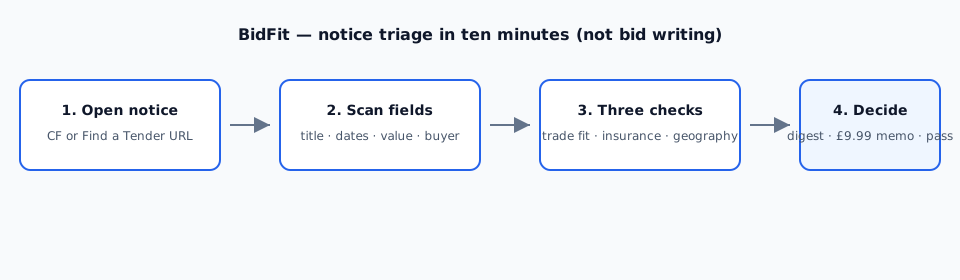
Here is a practical triage sequence for soft FM and trades SMEs scanning Contracts Finder and Find a Tender:
-
Check the notice summary first. If PL or PI minimums are stated up-front and you already know your existing cover is below the ask, that is a fast no-bid. Do not download the pack.
-
If unstated, assess the risk and value. A £150k hospital cleaning contract is more likely to ask for £10m PL than a £15k gutter-cleaning call-off. If you hold £2m and the context suggests a high ask, decide whether opening the pack is worth your time.
-
When the pack states the limit, get a broker quote before bidding. "I think we can upgrade" is not a plan. A costed quote from your broker, with annual renewal impact, is. If the quote wipes your margin, stop.
-
Do not bid hoping the buyer will negotiate down. Public procurement minimums are usually non-negotiable. If the pack says £10m PL and you hold £5m, you are out unless you upgrade. The buyer will not waive the gate to accommodate your existing policy.
This is not risk-aversion. It is triage. Spending a week and £3,000 on a bid for a contract you cannot insure is the real risk.
What a BidFit memo flags (and what it will not guess)
When you order a £9.99 or £29.99 BidFit bid/no-bid memo, the insurance section flags:
- Stated public liability and professional indemnity minimums from the notice or forwarded pack.
- Pass or fail against the insurance profile you provided (for example, "You stated £2m PL; buyer asks £5m PL → Fail").
- Unknown when the limit is not stated on the notice and you have not sent the pack (the £9.99 public-notice product).
- A plain note when the stated limit is disproportionate to the contract value or typical for the trade, as a triage flag — not as grounds to ignore the requirement.
What the memo will not do: invent an "industry standard" PL assumption when the notice is silent; advise you to upgrade or not upgrade your insurance; negotiate with the buyer on your behalf; or provide insurance, legal, or bid-writing advice. The memo is a decision document. The decision remains yours.
Sample memo showing insurance gates in practice: Bedford College — window cleaning (£9.99 product; pack not opened; insurance limits marked Unknown).
A note on turnover multiples and bonding
Public liability is not the only financial gate. Many public tenders also ask for:
- Turnover multiples. "Average annual turnover in the last three years must be at least 1× (or 2×) the estimated annual contract value." A £100k annual lot asking 2× turnover means £200k minimum turnover. If your last three years average £80k, you fail. Full notice-stage literacy: turnover requirements on Contracts Finder notices.
- Performance bonds or parent-company guarantees. More common on higher-value Find a Tender work; rare on small Contracts Finder lots but not impossible.
- Employer's liability and motor insurance. Usually a lower gate (EL is a legal requirement for employers; standard motor cover for van fleets), but still a stated requirement you must evidence.
All of these sit in the same triage layer as public liability. If the stated minimum is above what you hold and the cost to meet it is uneconomic, that is a no-bid. Do not treat one gate (PL) as negotiable and another (turnover) as fixed — they are all fixed unless the buyer says otherwise in writing.
When to use BidFit's free digest or £9.99 memo
If you are watching Contracts Finder and Find a Tender and want insurance gates flagged before you spend bid-writing time:
- Free weekly or £19/month daily digest: short email of matching notices for your trade and region. Alerts you to what is live; does not open packs or check insurance limits for you. Use this to triage the week's matches in ten minutes. How the digest works.
- £9.99 public-notice memo: paste a Contracts Finder or Find a Tender URL you found yourself (or one from the digest). We pull the published notice, flag stated insurance minimums and other mandatory gates, and write a sourced Go / No-go before you open the pack. Gates that live only in the pack are marked Unknown. Sample: Bedford windows.
- £29.99 pack memo: same structure after you forward the ITT / SQ pack. Insurance limits, turnover multiples, TUPE, and scoring weights that were Unknown on the public notice are now filled from the documents you send. You still write the bid if the verdict is Go; we stop at the decision document.
Full price list. How a memo is built.
Questions
Where do public liability limits appear on a Contracts Finder notice?
Public liability (PL) and professional indemnity (PI) minimums often appear in the ITT pack, not the published notice summary. Some buyers state the limit up-front in the notice text or mandatory requirements section. If unstated on the notice, the limit is Unknown until you open the pack.
Why does a £5m PL requirement knock out small soft FM firms?
Many cleaning, window-cleaning, and grounds SMEs carry £1m, £2m, or £5m public liability as standard. A buyer asking for £10m PL on a £50k window-cleaning lot effectively narrows the field to larger facilities operators or forces a mid-bid insurance upgrade that wipes margin. If your existing PL sits below the stated minimum and the premium jump is uneconomic, that is a fast no-bid.
Should I upgrade my insurance to chase a single tender?
Only after running the numbers. A mid-bid upgrade quote eats margin; annual renewal uplift compounds across future work; and you may still lose. If the stated limit is £10m and your broker quotes a material premium increase, treat that as a gate fail unless the contract margin and renewal likelihood justify the standing cost. BidFit memos are not insurance advice.
How does estimated contract value affect the insurance ask?
Buyers often set public liability minimums as a multiple of the contract value — for example 1× or 2× the total value, or a flat minimum that reflects the risk environment (live hospital, schools with pupils present, height work). A £200k lot asking £2m PL is proportional; the same lot asking £10m PL is either copy-paste from a bigger framework or signals risk you may not want.
Can BidFit tell me whether to upgrade my insurance?
No. BidFit memos flag the stated public liability and professional indemnity minimums from the notice or pack, mark pass/fail against the profile you give us, and note when a limit is Unknown. Insurance and margin decisions remain yours. We do not provide insurance, legal, or bid-writing advice.
More guides
All BidFit guides: /guides/. Turnover gates: turnover requirements on Contracts Finder notices. Portal alerts: Contracts Finder + Find a Tender alerts without six tabs. Soft FM filter hygiene: Soft FM Contracts Finder filters. Memo versus match: When a notice match needs a memo. Product overview: free tender digest.
Triage insurance gates before you write the bid
Use the free weekly digest to see what is live. Order a £9.99 memo when you need stated insurance limits and other mandatory gates flagged before you spend bid-writing hours.